
Sumerian Shakespeare
Who invented realistic human portraits?
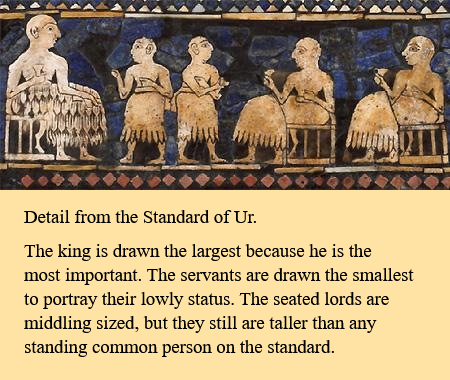
In ancient times, all human portraits in the world were generic. All of the faces were
the same, without any attempt to make them resemble the people they portrayed.
For example, on the Standard of Ur, the faces of the lords, the king, and the servants,
all look the same.
The only sure way to tell them apart is by looking at their relative size.
Click on any image. If an enlargement is available, it will display in a separate tab.
In 2008, I “discovered” the portrait of the Sumerian king Ur-Namma (2112 - 2094 BC)
in the Met museum. It is obviously a realistic portrait of a distinct individual, and not just “some guy,” as indicated by the Met. Ur-Namma is easy to recognize because of his asymmetric eyes.
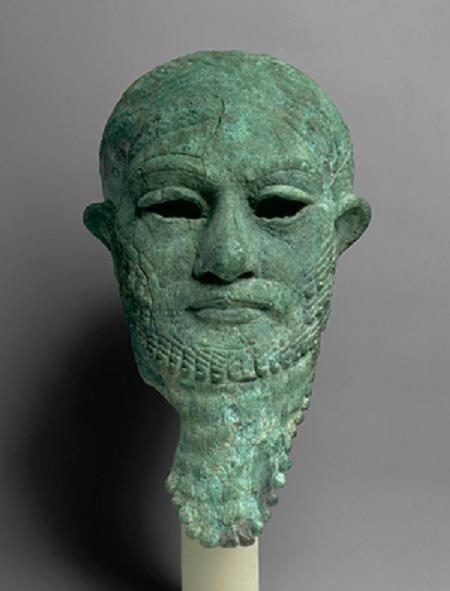
I declared that The Face of Ur-Namma was the first realistic portrait in the world.
This means that Ur-Namma is the first recognizable man in all of human history.
Then in 2011, I saw The Face of Gudea

Gudea (2140 ‑ 2120 BC) predates Ur-Namma by a few years. I therefore had to revise
my claim that Ur-Namma is the first recognizable man in all of human history.
Now Gudea is the first recognizable man.
I later discovered realistic portraits for two of his sons and his daughter.
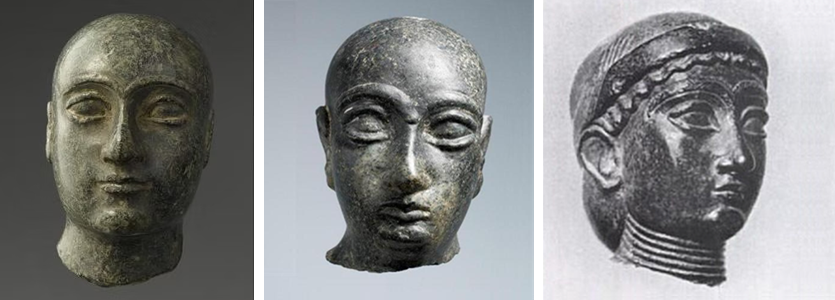
The faces of Ur-Ningirsu, Lugal-agrigzi, and a Sumerian princess.
As a result of seeing all of these family portraits...
I concluded that Gudea “invented” realistic human portraiture in the artistic renaissance
that occurred during his reign.
Then I saw the face of Enheduanna.
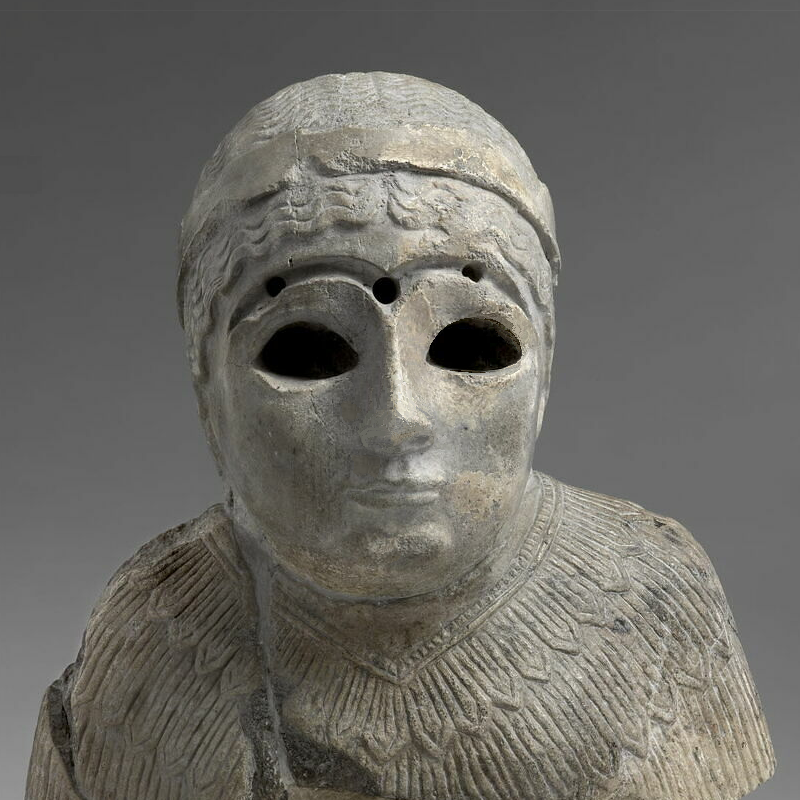
Enheduanna was the daughter of the Akkadian king Sargon. Enheduanna was
a poet and a priestess. She is the first author in history that is known by name.
As can be seen below, this statue is obviously a realistic portrait of Enheduanna’s
facial features. Clearly the statute was modeled from real life.
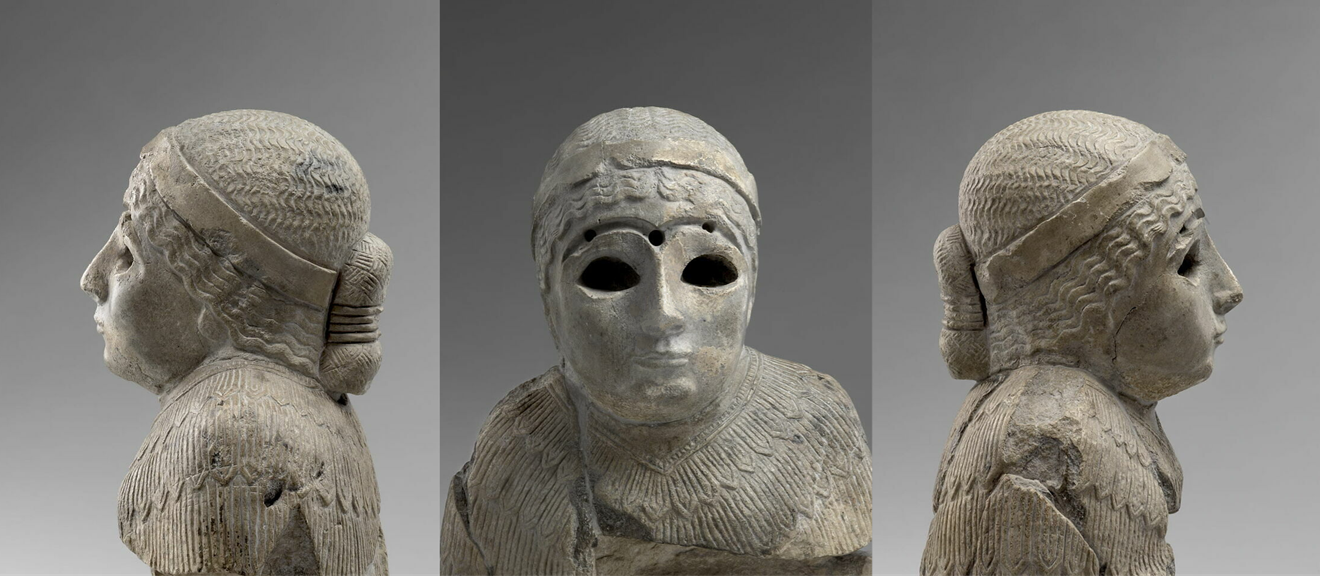
This makes Enheduanna the first recognizable woman in all of history.
Hmm...
I had earlier said that realistic portraits first appeared during the reign of Gudea –
but Enheduanna lived in the Old Akkadian period (2350 - 2200 BC). That means
she predates Gudea by more than 100 years.
So now the question is: Who invented realistic human portraits? The Sumerians or
the Akkadians?
You may be thinking, “Well, obviously the Akkadians did it, 100 years before the Sumerians.”
However, I think the answer is more complicated than that.
For one thing, with the exception of Enheduanna, there aren’t any other realistic portraits from the Old Akkadian period, not a single one.

This is a generic portrait of Sargon. There is nothing distinctive about his face. It could
just as easily be any other bearded man in Mesopotamia.
In fact, very few artifacts of any kind survived the fall of the Akkadian Empire. That’s
because the Akkadian Empire was truly despised. When it finally fell, its capital city of Agade was completely destroyed. It was basically wiped off the face of the earth. To this day,
no one even knows where it is.
However, in the few remaining artifacts, there is some evidence that a new kind of natural realism started to appear in Old Akkadian art. Scholars have noted that depictions of the human body seem more natural than in the preceding Early Dynastic period.

Early Dynastic votive statue. The body is not very realistic.
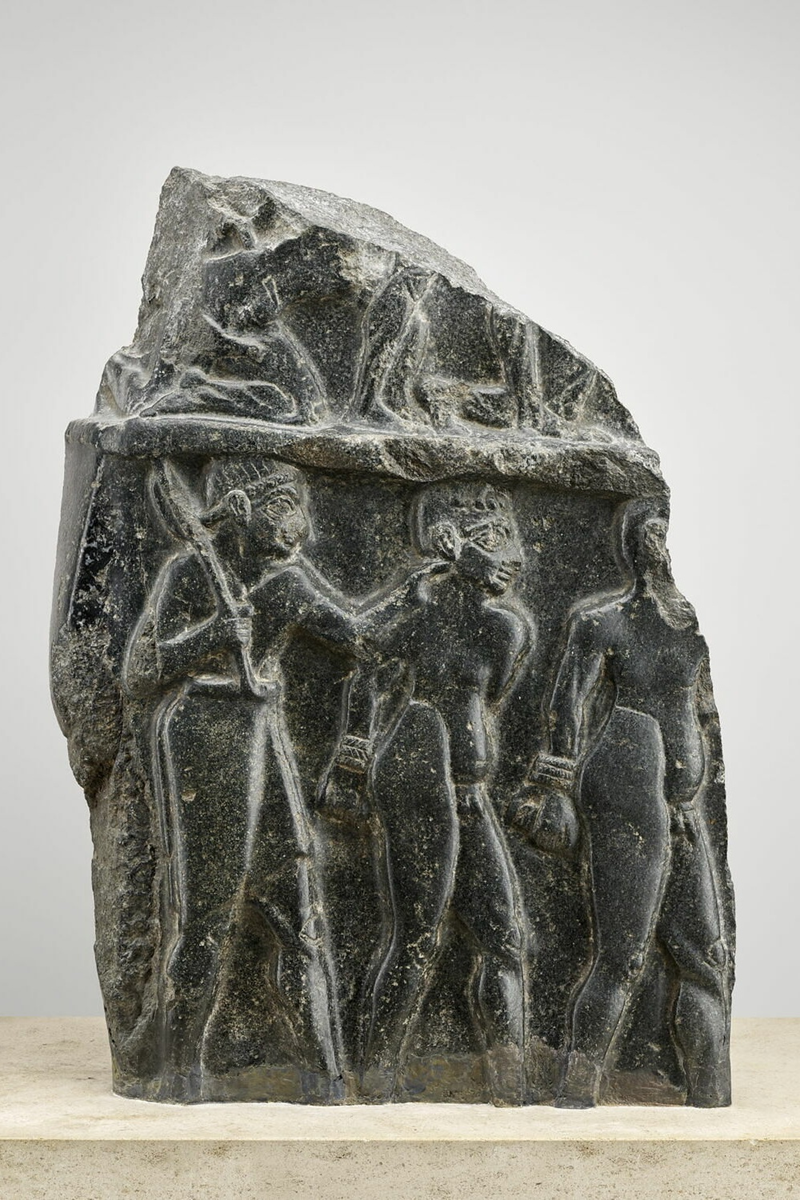
Bound Akkadian prisoners are led into captivity.
This is part of a Sargon victory stele. It commemorates his defeat of Ur-Zababa, his
rightful king. It occurred right at the very beginning of the Old Akkadian period because
this is when Sargon usurped the throne of Ur-Zababa to thus become the king of Kish, the “King of Kings.” See Sargon’s Victory Stele.
Although the bodies are more natural compared to the preceding Early Dynastic period,
they are not as realistic when compared to later examples in Old Akkadian art.
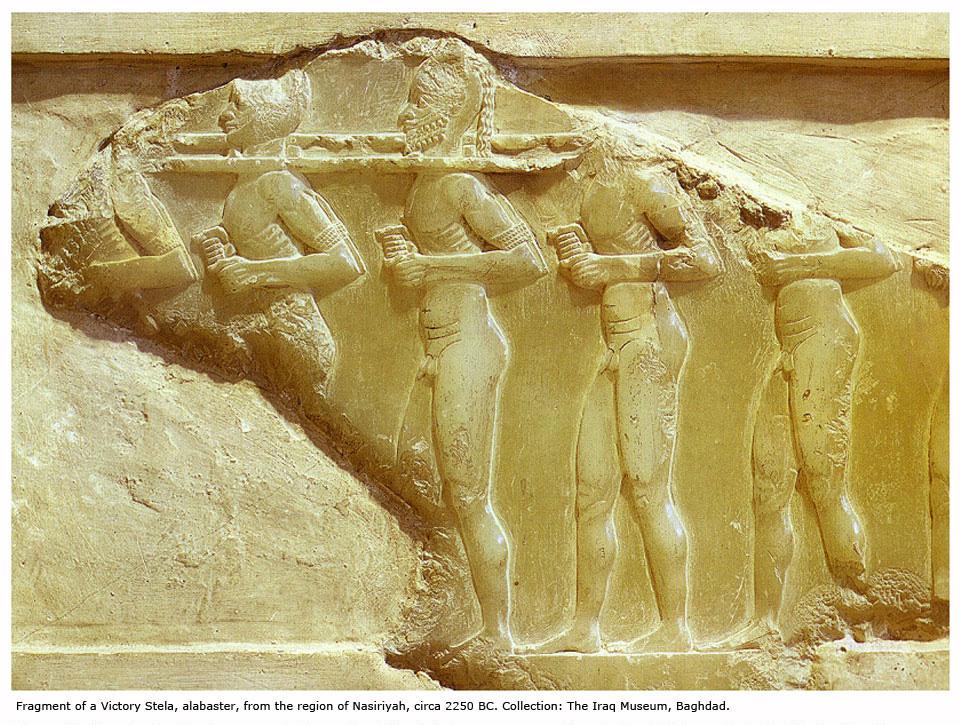
Bound prisoners in a neck stock. Notice that the bodies look more natural, more lifelike.
This is part of another Akkadian stele (circa 2250 BC, about the time of Sargon’s grandson Naram-Sin). It was discovered in Nasiriyah, a suburb right next to the Sumerian city of Ur.
Therein lies a big clue to the statue of Enheduanna and the invention of realistic human portraits.
But first, some background information:
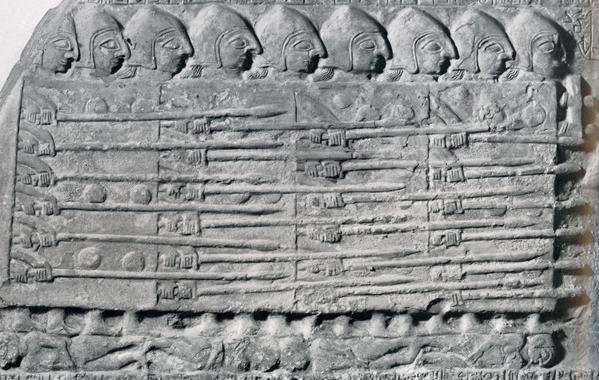
A phalanx of Sumerian soldiers on the attack.
During the Early Dynastic period, the Sumerians and the Akkadians were constantly at war. The Sumerians were usually the aggressors. Many ambitious Sumerian kings hoped to conquer Kish and the Akkadian allies to thus become the new king of Kish, the King of Kings, the ruler of both Sumer and Akkad. These kings included Eannatum, Meskalamdug, Mesannepada, and the king on the Standard of Ur, to name just a few.
See The Standard of Ur Narratives.
Any Sumerian occupation of Akkad was always temporary. Eventually the Akkadian allies would rally and expel the Sumerian invaders. Thus things continued for many decades,
if not centuries. Perhaps unsurprisingly, the arts did not flourish in either Sumer or Akkad during this period of constant warfare.
Things were different after Sargon conquered Sumer. The Akkadian Empire was here to stay, at least for now. It will last for the next 150 years.
The Sumerians had always been a warrior people, but now they were no longer a military power. Many of their soldiers were drafted into the Akkadian army, so the Sumerians
could no longer focus their efforts on wars of foreign conquest and civil wars at home.
What else were they going to do?
The Pax Akkadian
The Sumerians and the Akkadians will become like the Greeks and the Romans.
The Greeks had always been a warlike people. They were involved in countless wars against their neighbors and against each other.
Then they were conquered by the Romans.
The Romans imposed the Pax Romana on the Greeks (and everybody else). Pax Romana
is the “Roman peace.” It means that the conquered people cannot wage war against
each other, because all of them are parts of the Roman Empire. Pax Romana implies
“peace at the expense of liberty,” but it does have its advantages. Trade routes open up
and wealth is accrued, cities are built rather than destroyed, luxury goods are produced rather than weapons of war, and all of the arts begin to flourish.
So there it is.
I suggest the Sumerians became like the ancient Greeks to the Romans. Most of what is considered “Roman art” was actually produced by the Greeks. After the Sumerians finally stopped rebelling against the Akkadians, they had no choice but to settle into more peaceful pursuits.
Of course the Akkadians had a few artists (just like the Romans had a few artists) but the Akkadians had an empire to build, to govern, and to protect. They let the “provincials”
create most of the artwork.

That is why I think the Sumerians sculpted the statue of Enheduanna, and in so doing they invented realistic human portraiture.
Of course it’s possible that the statue was carved in Kish by an Akkadian sculptor, and then
hauled 100 miles to the city of Ur. Or it was sculpted in Ur by an Akkadian artisan who had been transplanted far away from his homeland. But neither of these explanations make
a whole lot of sense.
The simplest explanation is usually the best. I therefore suggest: 1) the Enheduanna statue was carved in Ur, 2) by a Sumerian, and 3) the Sumerians were the ones who invented realistic human portraits.
This explains how the Sumerians, after 150 years of subjugation, and the fall of the
Akkadian Empire, “suddenly” had an artistic renaissance. That’s because the artistic elements
were already in place, and they blossomed under Gudea and other Sumerian kings. Mesopotamian art (including realistic portraiture) will reach its greatest perfection during this Neo-Sumerian revival.
The Louvre was told the statue was discovered in the Sumerian city of “Umma (?)” The “?”
is a red herring, indicating the statue was probably excavated illegally and it was discovered anywhere else except Umma.
Enheduanna’s temple was in Ur, so I say that Ur is where her statue was found. It is therefore
far more likely that the statue was carved by a Sumerian, and not by an Akkadian.
Enheduanna is known to be alive during the reign of Sargon’s grandson, Naram-Sin.
This is the same time frame as the realistic Akkadian stele from Nasiriyah, the suburb
next to the city of Ur.
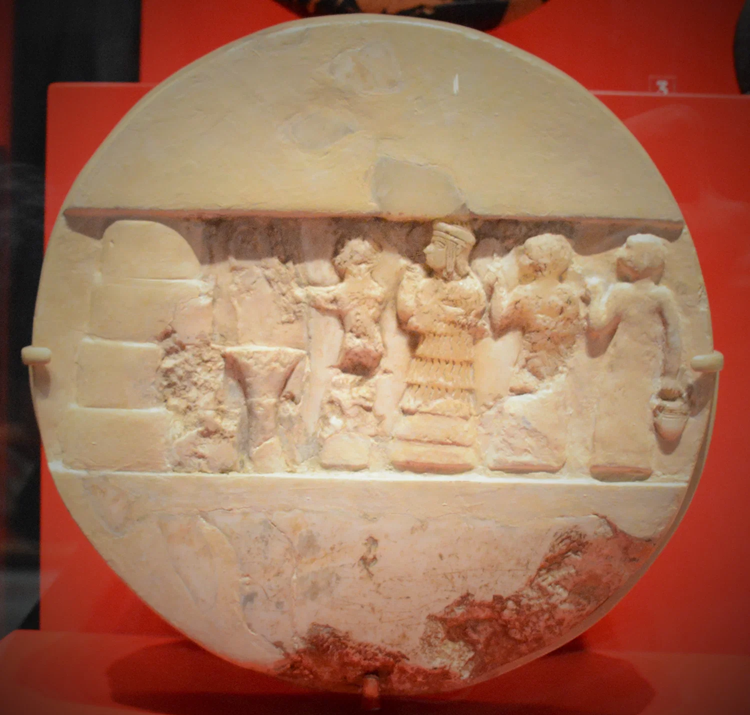
Enheduanna’s disk was also found in Ur.
There is absolutely no evidence that the disk and the statue were carved anywhere else.
The skill and artistry of Enheduanna’s statue indicates that it was not the first realistic
portrait that was created in Sumer (earlier examples would not be so perfectly sculpted).
Other statues were probably lost, or destroyed, or they still lie buried somewhere
waiting to be discovered.
As previously mentioned, the Akkadian Empire was completely destroyed and only a few
of its artifacts remained.
It is indeed fortunate that this one statue has survived. This is the portrait of an extraordinary woman who lived and died more than 4,000 years ago.
And now she has been resurrected into the modern world.

Enheduanna. A princess, a poet, and a priestess.
The first recognizable woman in all of human history.
August 17, 2026
